
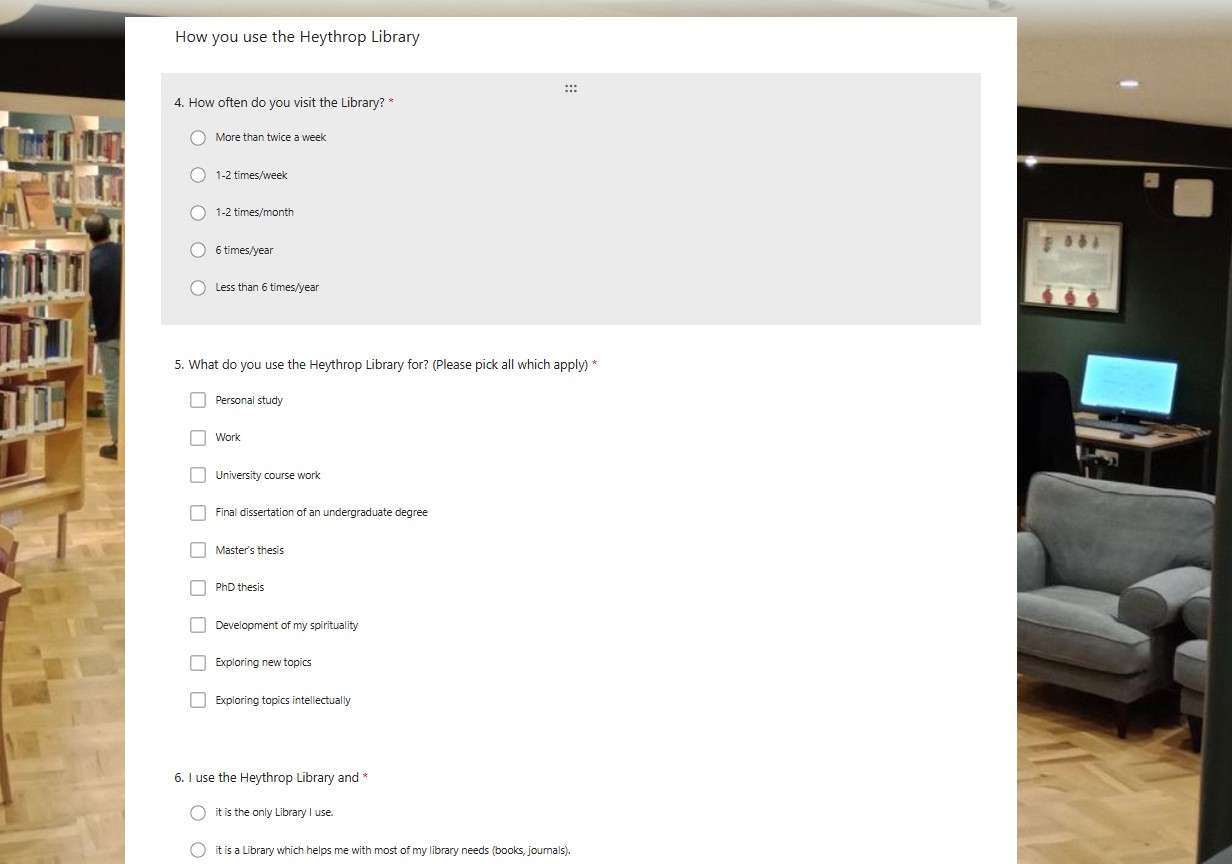
In May 2026 we invited 361 library users (those with active accounts) to respond to a user survey, and 101 people replied. We will share the findings, their responses and our comments (where appropriate) to this user survey 2026.
For this second post in the series analysing the results of the survey, we turned our attention to the ways in which our users like to use the library, as reported by them.
Of the 101 respondents, the most common answer concerning frequency of visits was 6 times year (or on average once every other month), closely followed by 1 or 2 times per month:

As we are a lending library with quite generous loan periods for our books, this might have an impact on how many visits our users are having to make. Users can check out up to 6 books at a time and can have up to 5 automatic renewals for these books: with 28 days in a single loan period, this means users could potentially have a book checked out them for almost 6 months!
We asked our users for their reason for wanting to use our library, and the majority (72 respondents) said ‘personal study’: This is quite broad but captures most things which are not covered by more formal educational reasons, such as degree qualifications, dissertations, postgraduate theses, and so on. Development of spirituality was the second most popular response:

This tracks with the demographic data we looked at in part 1 of this series, and with our experience of the ISC and LJC student user groups; they are our most frequent borrowers of books held in the reading room, due to our extensive spirituality collection, and the proximity we have to the in-person LJC classes.
When we looked at our users’ responses to how their Heythrop library use factors into the broader context of which other libraries they use, the data perhaps illuminates why most of our users answered the previous 2 questions the way they did. A quarter of our members told us that ours was the only library that they use, but most (76% of respondents) use other libraries as well. This might account for the fact that a clear majority are interested in the Heythrop Library for ‘personal study’ over other reasons, such as university work. Those that do have dissertations or other similar assignments to write are probably accessing their own university library for this purpose first – and thus may not need to visit us with the same frequency.

What else might this data tell us? It was interesting to discover that though we are only one part of the broader ecosystem of libraries that our members use, the most common sentiment was that we do provide some unique materials not found at the other libraries visited by the respondents.
Ultimately, every one of our library members has their own unique set of circumstances and preferences in their engagement with our collection, but it is very interesting to be able to look at overall trends, to see if there are ways we can make improvements to our service.
SV.
What are your thoughts about the above?