
Following up on my previous ‘Cataloguing treasures’ post, I have encountered many more pieces of ephemera in the past couple of months. Ranging from advanced review notes from publishers, to Christ memorabilia.
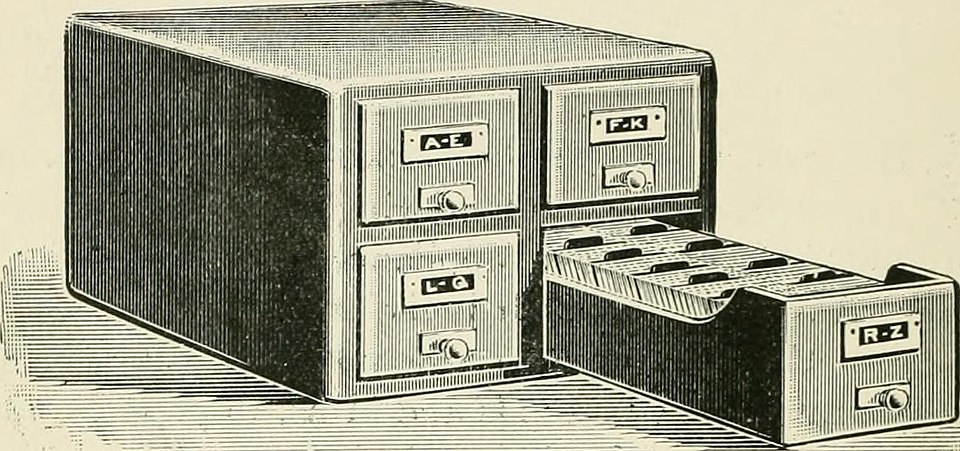
The majority of the material I have discovered is comprised of index cards from the card catalogue at Heythrop Library. This version of the catalogue was gradually replaced by computerized cataloguing in 1990. We now primarily use an online public access catalogue (OPAC).

Parts of our card catalogue have been digitized and can be accessed here (login as librarycatalogue@jesuit.org.uk, with password Heythrop1!)
However, the card catalogue isn’t very trustworthy. The library has gone through 4 collections moves since the card catalogue was last updated in the 90s. This means that though we might have an index card referring to a particular book, we might not even own that book anymore. It could have been lost (after a borrower did not return a book), or just went missing.
Despite these issues, the card catalogue can be a useful tool for me as I catalogue uncatalogued books from offsite storage to the online catalogue. Particularly with rare books. For example, if I need to clarify a title from a book that has an incomplete title page or a font that is very difficult to read. Admittedly, I have pretty bad luck with this most of the time as searching the index cards is a delicate art!

Currently our card catalogue cabinets are being stored in offsite storage at Crown. One of our projects going foreword is to potentially condense the index cards into boxes to be sent to Deepstore. In doing this we hope to make the index cards more accessible and to save on space.
As always, I enjoy interacting with the ephemera contained within our uncatalogued books as it gives me the opportunity to explore Heythrop Library’s history more in depth!
AL

What are your thoughts about the above?